^ Watch Me! ^
“The Eye Of The Storm” is the final product of my Film Studies A Level course work. I would describe it, but I also wrote an entire critical evaluation of it as part of the course as well, so why not just give you that?
If the Drop Down’s Aren’t Expanding Please Refresh The Page And Try Again.
JONAS (V.O.)
Where do we find peace? For some of us it’s in nature
JONAS (V.O.)
For some: the city.
JONAS (V.O.)
Some people might read a book while others would rather play a video game. Peace is a universal feeling that I think all of us yearn for in some way or another.
JONAS (V.O.)
It’s a core human desire. We fight for it, buy for it, live for it, die for it.
JONAS (V.O.)
It’s the reason people work or do art or anything really. It all works towards the common goal of finding peace, and happiness within that peace. But why?
JONAS (V.O.)
The modern world is fast, too fast, it’s unrelenting for many people.
JONAS (V.O.)
And that can cause us to feel as if we are losing control.
JONAS (V.O.)
To find peace is to be in control, not of what’s happening, but of how you feel.
JONAS (V.O.)
So it’s no wonder that escapism is such a crucial part of our daily lives.
JONAS
How regularly would you say you use a form of escapism?
JONAS
What is your go to way of doing so?
JONAS
Do you think everyone needs a form of escapism?
JONAS
When is it that you most feel in need of peace?
JONAS (V.O.)
What is peace to me?
JONAS(V.O.)
In the turmoil of life. We strive to find the calm, the quiet. To find the eye, of the storm.
The Eye Of The Storm
Written by
JONAS SHEPHERD
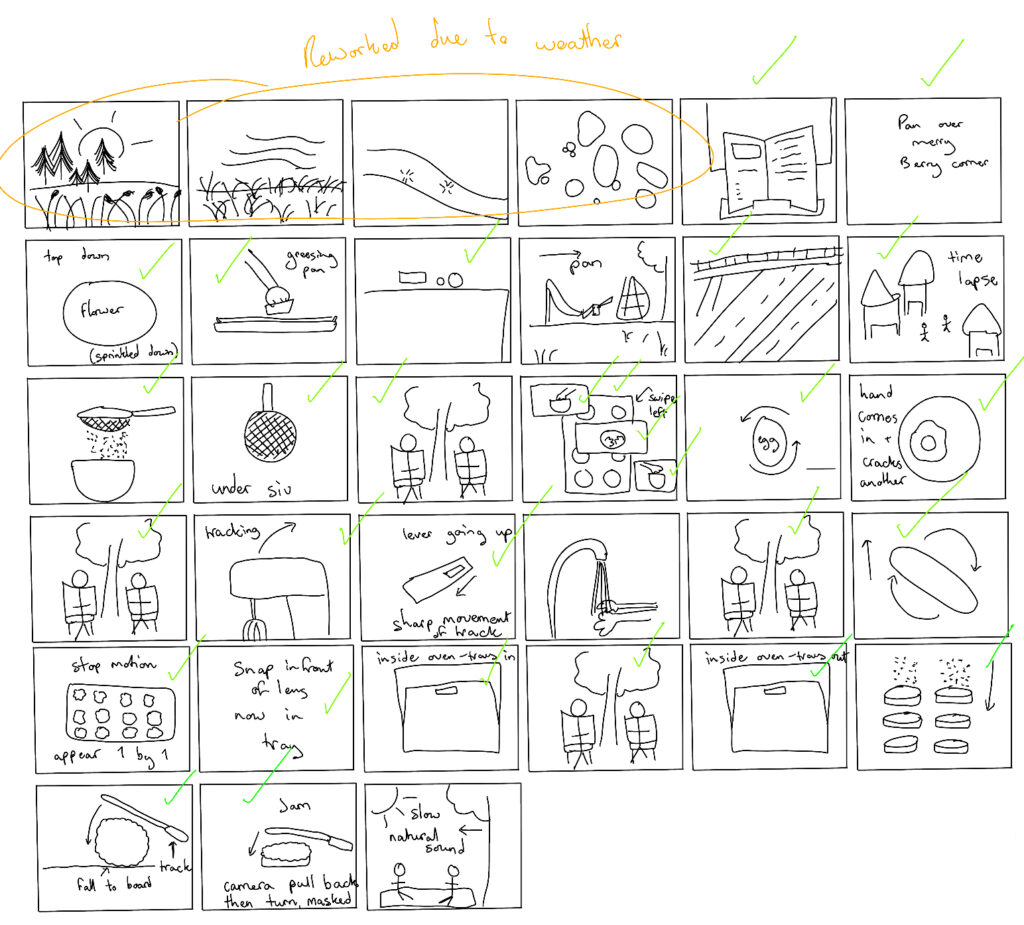
Ext. Field – Early Morning
A wide rolling field of long grass and crops. There is a light breeze and the sound of bird song can be heard. The camera pans slowly over the landscape starting at an area of trees which opens out where the tall, lone silhouette of an English elm divides a pale blue sky. The camera continues and reaches another area of trees, colour now becoming much warmer as the sun breaks through the tree line, just visible, and paints the grass in a golden light. A slight lens flare.
Cut To.
The camera is now low. A static wide shot of the field facing the forest. Long shadows cast by the trees fall over the golden grass which billows and sways in the wind. More bird song and gentle music slowly fades in, it is a melodic, happy tune used in “The Lord Of The Rings” trilogy.
Cut To.
An AERIAL shot of a river, the light is still warm but a little time has passed. Small glints and reflections of the sun’s light reflects off the gentle waters. The music continues, ambient diegetic sounds of nature can be heard over the music, neither sound dominates the other.
Cut To.
A CLOSE UP through the water of stones and pebbles on the riverbed, light and water reflections slowly dancing over their surfaces. A KEN BURNS EFFECT is used to slowly zoom on the rocks. Gentle lapping of water can be heard.
Cut To.
Int. Kitchen – Morning
A mid shot of a small, cozy cooking corner of a kitchen. The shot is symmetrical, with a large well-loved book open in a stand, centre frame. The floury page depicts scones and behind is a large window looking out onto a garden. The light is warm and the clean oak surface of the countertop shines in the light. Blue skies and green bushes punctuated with a variety of flowers can be seen outside. Most diegetic sound is now gone as a quiet peace takes its place. The music continues. On the windowsill a small glass dragon sits next to a photo of the beach. On the left an electric whisk is accompanies by an ornate glass cake stand, with an inactive light up tree behind. A small clock and measuring jug are to the right, along with some fine china and decorated plates.
Cut To.
We ZOOM OUT to a wider shot of the same area. The camera is at an angle looking at “Mary Berry Corner” (or just Berry Corner for short) from the left. A SLOW PAN from right to left over Berry Corner shows off the items on it.
Cut To.
A TOP-DOWN shot of the countertop in Berry Corner. A gentle smattering of flour falls from above the camera and begins to cover the wood in a rough circle.
JONAS (V.O.)
Where do we find peace? For some of us it’s in nature.
Cut To.
Ext. Tree – day
A SLOW TILT UP over the trunk of a large tree. A shallow depth of field draws the attention to the detail of the bark. Ambient sounds of nature return.
JONAS (V.O.)
For some: the city.
Cut To.
Ext. Cambridge Street – day
A wide shot of the streets of Cambridge. Louder diegetic ambient sounds of people talking, cars driving buy etc can be heard. The static shot lingers as people walk past. It is a sunny day and there are lots of people out. A busker can be seen to the left.
Cut To.
Int. Kitchen – day
Back in Berry Corner. A CLOSE-UP LOW shot level with the countertop. A baking pan takes up the majority of the frame. A hand reaches down into frame holding a small cube of butter and begins to grease the pan with gentle, methodical movements.
JONAS (V.O.)
Some people might read a book while others would rather play a video game. Peace is a universal feeling that I think all of us yearn for in some way or another.
Cut To.
Int. Kitchen – day
A close TRACKING SHOT of a hand as it reaches up and presses the on button of the oven, the hand turns a dial to 200 degrees C and exits frame. The camera ZOOMS out as the warm glow of the oven ignites.
JONAS (V.O.)
It’s a core human desire. We fight for it, buy for it, live for it, die for it.
Cut To.
Ext. Playground – day
A SLOW PANNING WIDE SHOT goes from left to right over a playground. Distant laughter and shouts from children playing can be heard. There is a well used red slide and a wooden climbing frame. To the left of the fences area is a dilapidated shed, a small hedge lined road separating it all from the main field where to the right a line of bushy green trees stands.
JONAS (V.O.)
It’s the reason people work or do art or anything really. It all works towards the common goal of finding peace, and happiness within that peace. But why?
Smash Cut To.
Ext. Highway – day
An AERIAL STATIC SHOT of a busy highway. Cars and trucks rush past in blurs of mechanical sound. The ambience acts as a cacophony, drowning out the music. Non-diegetic car horns occasionally sound, to add to the uncomfortable atmosphere. The colour grading has become cool and less inviting, with a greener tint
JONAS (V.O.)
The modern world is fast, too fast, it’s unrelenting for many people.
Cut To.
Ext. Cambridge market – day
A STATIC WIDE shot of the busy marketplace. The footage is in Timelapse as blurred figures of passers by and tourists alike wiz past. The overwhelming sounds of the city grow and build, layering over that of the highway. The lighting is harsh and bright in midday sun.
JONAS (V.O.)
And that can cause us to feel as if we are losing control.
Smash Cut To.
Int. kitchen – day
The lighting is even again, warmth has returned to the colour grading. A CLOSE STATIC shot of a sift over a bowl as flour is poured gently down.
Cut To.
Int. kitchen – day
Now “in the bowl” the camera is facing directly up at the ceiling. Above is the sift. Flour/sugar falls in a light powder down onto the lens of the camera until the view is obscured. The music has returned.
JONAS (V.O.)
To find peace is to be in control, not of what’s happening, but of how you feel.
Fade To Black.
JONAS (V.O.)
So it’s no wonder that escapism is such a crucial part of our daily lives.
Fade in.
Ext. garden – day
Two chairs are set up next to each other. A black metal garden table sits in the foreground of the STATIC MID SHOT. On the left of the frame is a delicate, patterned, tiered cake stand, with an assortment of confectionaries. In the background is the trunk of a tall pine tree, a large bushy tree to its right, bordering the frame. Wood pigeons and other birds can be heard, as the music continues underneath the diegetic dialogue. Two people are seated in the chairs.
JONAS
How regularly would you say you use a form of escapism?
INTERVIEW
L-Cut To.
Int. kitchen – day
A TOP DOWN CLOSE UP of an open egg box. A hand reaches into frame and takes one of the eggs, pushing the box out of frame and placing the egg down. As this happens, smaller clips appear in the top left, centre, and bottom right of the frame, partially obscuring the backing footage. Each one depicts a bowl of mixture being mixed by hand from a different angle. The top left is a mid shot from the left, the centre is a top down shot, and the shot on the right is a mirror image of the left side. Once all of these clips have appeared in sequence, they cut out simultaneously to show the single egg lying centre frame. Hands come in and spin the egg widdershins.
INTERVIEW (V.O.)
Match cut to.
Int. kitchen – day
Where the egg was, the bowl of mixture is, an egg yolk where the egg was. A hand come into shot from the right and cracks another egg on the side of the bowl, dropping it in next to the first.
Cut To.
Ext. garden – day
Two chairs are set up next to each other. A black metal garden table sits in the foreground of the STATIC MID SHOT. On the left of the frame is a delicate, patterned, tiered cake stand, with an assortment of confectionaries. In the background is the trunk of a tall pine tree, a large bushy tree to its right, bordering the frame. Wood pigeons and other birds can be heard, as the music continues underneath the diegetic dialogue. Two people are seated in the chairs. The grading is warm and comforting with an enhanced contrast and saturation to heighten the aesthetic.
JONAS
What is your go to way of doing so?
INTERVIEW
L-Cut To.
INTERVIEW (V.O.)
Int. kitchen – day
A MID SHOT of the electric whisk centre frame. The backdrop is of the pale white walls so the focus is on the whisk. The camera TRACKS the whisk with a roll as the top is lifted up. A whisk attachment is then added and slots into place. The diegetic sound of this can be heard quietly over the music and narration. SIDE LIGHTING comes from the window out of shot to the right.
Cut To.
Int. kitchen – day
An EXTREME CLOSE UP of the on lever of the whisk. The camera TRACKS the lever as a hand push’s it into the “level 5” on position from the right of the frame. JUMP CUTS break this movement up. The hum of the whisk starts but is slightly muffled as not to overpower the narration and music.
L-Cut To.
Int. kitchen – day
A MID SHOT of the sink at a slight left angle allowing for a view out of a large window overlooking a hedge and blue car, beyond that, tall silver birch and oak trees. A figure walks into frame from the right and turns on the tap. The whisk can still be heard quiet now in the background, the diegetic sound of rushing water is now noticeable from the sink. The figure washes their hands thoroughly. More natural side lighting comes from the window.
Cut To.
Ext. garden – day
Two chairs are set up next to each other. A black metal garden table sits in the foreground of the STATIC MID SHOT. On the left of the frame is a delicate, patterned, tiered cake stand, with an assortment of confectionaries. In the background is the trunk of a tall pine tree, a large bushy tree to its right, bordering the frame. Wood pigeons and other birds can be heard, as the music continues underneath the diegetic dialogue. Two people are seated in the chairs. The grading is warm and comforting with an enhanced contrast and saturation to heighten the aesthetic.
JONAS
Do you think everyone needs a form of escapism?
INTERVIEW
L-Cut To.
INTERVIEW (V.O.)
Int. kitchen – late afternoon
A TRACKING TILT SHOT of a rolling pin being thrown spinning upwards. The camera tracks the rolling pin up and then back down where it is caught by a hand. The hands then brings in down on a piece of dough and rolls it up and out of shot to the left. The decor of Mary Berry corner is visible in shot and the lighting is ambient natural light coming from the window.
Cut To.
Int. kitchen – late afternoon
A TOP DOWN SHOT of Berry Corner. This shot mirrors the earlier shot of the flour. In the flour’s place is now a rectangle of dough. A SERIES OF JUMP CUTS allows for a STOP MOTION EFFECT as cookie cutter scone shapes appear in uniform rows along the dough, one by one. Lighting is bright and natural coming from the window. The music and narration is playing, besides that no other sounds are heard. When all of the dough has been cut a hand comes into frame and snaps it’s fingers in front of the lens, obscuring the frame.
Match Cut To.
The shot is UNCHANGED but in place of the rectangle of dough there is a blackened, well used baking tray. The corrugated circles of dough are positioned in the same order that they were on the counter top. A hand reaches into shot and takes the tray.
Cut To.
Int. oven – late afternoon
A MID SHOT framed by the black edges of walls. The centre frame is also dark with faint light coming on as if from a window. A red light turns on from above the camera and it becomes apparent that the camera is inside an oven. The door to the oven opens and the tray of scones is pushed in. The door closes.
Cut To.
Ext. garden – day
Two chairs are set up next to each other. A black metal garden table sits in the foreground of the STATIC MID SHOT. On the left of the frame is a delicate, patterned, tiered cake stand, with an assortment of confectionaries. In the background is the trunk of a tall pine tree, a large bushy tree to its right, bordering the frame. Wood pigeons and other birds can be heard, as the music continues underneath the diegetic dialogue. Two people are seated in the chairs. The grading is warm and comforting with an enhanced contrast and saturation to heighten the aesthetic.
JONAS
When is it that you most feel in need of peace?
INTERVIEW
L-Cut To.
INTERVIEW (V.O.)
Int. oven – late afternoon
The camera is back in the oven. The scones are now fully risen. The door opens and the figure, now with a towel trapped over their hand, reaches in and removes the tray. The door closes again.
Cut To.
Int. kitchen – golden hour
A LOW ANGLE CLOSE UP of the scones. The frame is split half and half horizontally by the scones and the rest of the frame. From above sugar dust is sprinkled/sifted onto the scones as the camera PANS BACKWARDS across the tray. The lighting is warm and golden with long shadows, enhanced in post with grading. A slight lens flare strikes the screen as it moves.
Cut To.
The tray is gone as the camera TRACKS a knife downwards towards a scone which is being held up on its side. The knife slides through the scone and the camera follows. When it is fully cut the scone is let to drop in two pieces to the side, landing in the foreground.
Jump Cut To.
There is now jam on the knife, it slides over the top of the scone before breaking contact and coming up over the camera. The crimson strawberry jam reflects some of the light and crumbs litter the small ornate plate it’s sat on – these are the same plates as seen on Mary Berry Corner.
Cut To.
JONAS (V.O.)
What is peace to me?
INTERVIEW (V.O)
Ext. field – golden hour
A WIDE PANNING SHOT circles a group of people sitting in a field. They have a checkered picnic blanket, and they sit under a tree, dappled golden light hits the grass. The sound of birds and a gentle breeze accents the music as it reaches its conclusion. On the picnic blanket is the tiered cake stand, decorated with the same scones and confectionaries. There are glasses of juice, assortments of fruit and vegetables, and bowls of crisps. The camera comes to a halt as the final line is spoken, the group of people raise their glasses in a toast.
Fade To Black.
NEA Evaluation
“The Eye Of The Storm”: my cosy short film, aims to implement aspects of documentary-style storytelling, with varied cinematic micro elements to create a visually and emotionally striking ode to the importance of peace and escapism in a world that is often overwhelming and stressful. The warm, idyllic baking footage is accompanied by voice-over narration centred around what peace means to people, where it’s found, and why it’s important. In the second half of the film, the tranquil footage is broken up by shots from interviews taken with friends and family asking questions about their own experiences. Through this, I aim to portray themes of fantasy, anxiety and serenity, evoking a feeling of peace in the audience, reminiscent of the topic of the film itself.
I aimed to establish the calming, warm aesthetic of my short film through the use of mise-en-scene. Each moment carefully orchestrated to bring a cosy, cluttered, yet simple and pleasing feeling to the viewer: showing that peace is not simply found in order and structure. Within the opening, I establish my kitchen as a setting. The countertop clear with warm natural sunlight complimenting the wood, a silver electric whisk to the left with a cake stand beside it, a plain clock, and some China plates to the right all creating an ordered neatness to the shot. The intentional order here is set up to break down throughout the piece, as during the baking process, the countertop gets increasingly messy; flour scattered over it, opened sugar bags and a cloth draped over the cake stand, all building an environment that feels lived in. Making sure that the composition in each shot didn’t feel overwhelmingly messy, but rather comforting and familiar, peacefully in control without being conformist, this aesthetic and peaceful emotion evoked in the viewer, linking into my use of editing as well. This was inspired by the simple coffee shop setting seen in Arrival and The Great British Bake-Off which I externally researched for the associations of peace I have with it and baking.
Inspired by The Ellington Kid, Arrival, Slap and The Bear, from my own research, my use of editing aimed to enhance my established aesthetic and create pace, narrative, and influence what the viewer thought and felt. For example, my use of colour grading throughout the piece used an editorial palette of warm tones and high contrast, a heightened saturation at times accompanied by a subtle vignette brought an almost fantastical feel to the sequences of me baking. This effect was taken in contrast to Arrival which uses cool tones, deep shadows and heightened clarity to make a brutal and real feeling atmosphere, grounding it in the world, so reversing this in my work aimed to create the opposite effect. These moments were designed to be peaceful and idyllic, so my choices in colour were inspired by things like the opening to The Lord Of The Rings in the Shire, as well as the beautiful colours of golden hour. I here decided to find a contrast, as my film discusses why we need peace and escapism, exploring the stresses and overwhelming harshness of the modern world. And so, within a fast, jarring montage of a busy road, I juxtaposed the peaceful baking with the cold, blue tinted grading which I saw in Arrival. More severe vignettes making the shots feel claustrophobic, and the desaturated clarity on the road accompanying the narration to enforce what could be argued as a binary opposition (Strauss): beauty and safety in escapism versus dangerous, unpleasant every day. I wanted to lean into this further, as my use of shot speeds and transitions reflects the emotion and aesthetic of each moment too. In the kitchen, or nature, shots blend smoothly with fades and dissolves, lingering in static harmony and letting the viewer relax as they watch. While on the road, shots are fast and harsh, jumping from place to place and disorientating the viewer as the editing doesn’t allow them to settle in one place for too long, working alongside my use of sound to overwhelm them.
Through my cinematography, I aimed to engage and capture the viewer, inspired by both Tight Jeans and Over my use of cinematic composition and varied camera movements worked with the action, and kept the pace and flow of the film smooth. I implemented the long static shots seen throughout Over to comprise the majority of my opening, as I wanted the audience at this moment to simply enjoy the peaceful subject matter of nature, and static establishing shots allowed them to sit with each shot; appreciating what was going on and allowing them to actively engage with the piece. The theory of active engagement here, encouraging the viewer to formulate their own opinion. As the film progresses, my use of camera movement does as well, engaging the viewer, like the effect created in Tight Jeans as shots pan, zoom and cut away to different angles as the three figures sit talking on the wall. I did this primarily during the baking section, using top-down shots with side on angles of the same action, to give different perspectives simultaneously. Moving the camera smoothly as it tracks a hand upwards, as well as the implementation of semi-POV shots, positioning the viewer as an onlooker as well as the baker themself. I also took inspiration from Arrival in my replication of its use of natural lighting, the main source of light in my kitchen coming from a central window that often casts side lighting on the subject; creating a lovely chiaroscuro within my shots that both enhances the idyllic aesthetic of my piece and reflects the binary opposition (Strauss) of stress vs peace visually: within light vs dark and warm vs cold.
My film’s documentary style took inspiration from Growing Old and follows, to an extent, Todorov’s 3-5 stage structure. It begins with the establishment of the equilibrium with a calm, idyllic and gentle opening of nature and simple music. This develops as I discuss what peace is, my introduction of the world as an almost villain-like figure playing into a more abstract use of archetypal character roles (Propp) and setting up the narrative’s “disequilibrium” as the viewer is overwhelmed: made uncomfortable through the cinematography and editing that accompanies the exposition. By the end, a new equilibrium is reached in the final idyllic shots of the film which mirror the beginning. It was this intentional conformation to the norm that I thought best fitted the feeling I wanted to portray. In contrast to the short film style of starting in disequilibrium, a technique that helps develop narrative within their confined time; I wanted a classically structured and narratively satisfying piece as it’s better suited to the peaceful and gratifying matter discussed in the film, thus evoking that same peace in the viewer through its structure. This was also a break from convention I could afford, as my documentary elements and lack of character arcs to develop, meant I had time to play with in having a classical beginning, middle and end. Though my film intentionally has no “characters” it features my friends and family, and I wanted to make sure that I got realistic, genuine responses. I didn’t want it to be fake and undermine the point, so I deliberately gave them very little idea as to what I would be asking them, and did not instruct them to act a certain way, this maintaining the authenticity of it, and allowing my “characters” to be more relatable to the audience. Thus, my use of narration for exposition and plot development, heavily inspired by The Great British Bake Off, Growing Old and The Ellington Kid, was essential to providing clarity and context for the audience. I wanted my “Voice of God” to be just as genuine and real as the interviews, so I made sure that I was happy with what I was saying, however I also wanted to bring emotion and atmosphere, so utilised my vocal skills to reflect the emotion of each moment: louder and harsh during the city moments, while softer and slower in the kitchen.
Finally, my use of sound aimed to enhance my theme of peace with a backing track that could play throughout – like Operator and The Great British Bake Off, as this would help engage the viewer. I decided to overlay this with diegetic sound as well, to keep it grounded and help with realism. I also used it to further the moments of stress, as the peaceful music is drowned out by the loud sounds of cars and traffic.
Overall, I am extremely pleased with my film, feedback from viewers shows that my aims were perfectly met, with many going away and thinking about its message for days after. My aim was to create something that could speak to the audience and share my view on escapism and peace, and I feel that through my combined use of micro elements I have successfully achieved this.